Tuesday, 31 March 2015

Research Method

Well I think I talk about the problem too much, now is the time to move to the solutions. But then how? First we have to propose research methods in which we will further understand the problem better and the way to resolve it as well. Research method itself is "a process used to collect information and data for the purpose of making business decisions", reviewed by businessdictionary.com. Or in our case more relevant as the purpose of making better solutions.


For the common research methods we have literature research, surveys, interviews, focus groups, case study, and many more. literature search involves reviewing all readily available materials. These materials can include newspapers, magazines, reports, on-line data bases, and any other published materials. Mostly finding data from the internet is the fastest and most convenient way to get information. It is a very inexpensive method of gathering information, although it often does not yield timely information.


For survey, it is basically giving a group of people series of same questions aiming for different answers in a large scale and short amount of time. Survey can be in form of telephone in which the interviewer already preparing for the questions but allowing for some opinion probing, mail, even though it takes longer time to complete, or the most famous one is email and internet survey. It is relatively new but the fastest and the most cost effective way.


For interview, it is a way to get-in-depth and comprehensive information. It involves or more interviewing other person for detailed information that they usually will not answer in other survey methods. Typically, an interviewer will ask questions from a written questionnaire and record the answers verbatim.


While a focus group is used as a preliminary research technique to explore peoples ideas and attitudes. It is often used to test new approaches (such as products or advertising), and to discover customer concerns. A group of 6 to 20 people meet in a conference-room-like setting with a trained moderator. The moderator leads the group's discussion and keeps the focus on the areas they want to explore. 


Lastly, a case study is an in depth study of a particular situation rather than a sweeping statistical survey. It is a method used to narrow down a very broad field of research into one easily research-able topic. Whilst it will not answer a question completely, it will give some indications and allow further elaboration and hypothesis creation on a subject.


Then a unique research method can be done by mixing some common methods together into a flexible yet useful way. For example, we can do mixing between focus group and personal interview to get a general sample and also in depth answers from several people. 

However for our particular problem of too many vehicles, me and my group decided to use literature research as the background data, and internet survey as well as case studies for further research. Why, because it required less effort yet encompassing broader sample.

So, until next time people! :)

References :
http://www.businessdictionary.com/definition/research-methodology.html
https://www.statpac.com/surveys/research-methods.htm
https://explorable.com/case-study-research-design

Sunday, 29 March 2015

Who should we empathize on?

Back again to my precious journal :''. I CANNOT BELIEVE that im actually 6 blogs late. I do not know that i have to update it every week, or maybe i was just not listening to the teacher back then. HAHA. Anyway i have to catch up from week 2. THEN, here we go!

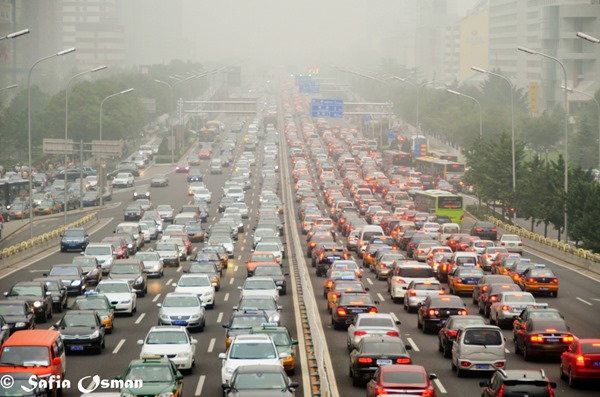
The topic for week 2 is empathizing the people who caught this problem. Yes, this problem, our problem, "too many cars". Ive been discussing this on few blogs before but i will do it more specifically in this blog. So, who should we empathize in this problem? The direct result of too many vehicles on the road is traffic jam, of course. And that would make the the user of the road as the one we should empathize on. However it does not signify greatly when they are not in urgent needs. Maybe they will late for work, or school, but it is already common nowadays and still counted as light disadvantages. But does it ever cross your mind if someone in a dying state need a fast medical assistance and every second counts? Well, it happens a lot. And yes, not few of them are died because of that. Here is one of the story.

BeijingTraffic

Beijing woman dies because ambulance stuck in traffic, reviewed by the Urban Country from Shanghaisit in 13 December 2012. Here is the exact report :


“A woman has died in Beijing when the ambulance that was transporting her to hospital got stuck in traffic. 
An emergency physician working alongside the paramedics vented her frustration online, “The scene of the accident is no more than 3 kilometers from the hospital, yet it took us a good 40 minutes to arrive there! Barely any cars made way for our ambulance! So woeful!” The tweet, posted to Weibo by user ‘Monica-Xiaomo’, was shared over 30,000 times. 
Other Weibo users responded to the doctor’s frustration, some blaming the drivers for having “cold-blooded souls” that they would not move out of the way for an ambulance (though, to be fair, in very heavy traffic there is little one driver can do). Others pointed to the allegedly frequent abuse of sirens by police cars and ambulances which they said had led to a “loss of trust”. 
The driver of the ambulance told Sina News that about half the drivers on the roads typically do not move out of the way of an ambulance. Worse, some drivers “purposely slow down ahead of me if I signaled them to move to other lanes”.


It is a quite ironic remembering the distance was so close yet they cannot managed to bring her in time. It is absolutely because of the severe traffic jam led from too many vehicles. However it is also from the lack of care from the other driver that must have been stress as well being stuck in a long congestion.


From this case we are reminded again to care about out surrounding, about something happens even though it is not directly related to us. It makes us learn to step on other people shoes and imagine how if something similar happened to us. How if we become the family of the victim or the victim herself. In the end, it is the core of the problem that we have to fight, that is the exceeded amount of vehicles on the road. And it is our responsibility to take part! :)


References :
http://www.theurbancountry.com/2012/12/beijing-woman-dies-because-ambulance.html

Tuesday, 24 February 2015

Solutions based on Cultures

HI PEEPS! I know it's already in the middle of the night, but im still all pumped up to do this blog! well actually it's because i woke up super late today, HAHA. Anyway, this week topic has something to do with culture. And, because my chosen topic is "too many cars" so it is about finding solutions from our cultures, well, my culture in this case. For all you don't know I am Indonesian and so I will pick something related with Indonesian cultures.

Initially there wasn't that many cars in indonesia. It only changes in these past decades. But then that would make a quite straight forward answer since that makes no available solution related to my culture for this problem. But then let us see the past transportation in Indonesia.

As a maritime and agrarian country, Indonesia had a lot of farmers and fisherman. They usually led a modest life and chose to walk or cycle for a short distance destination.


Below is called "sepeda onthel", which literally means pedaling bike. It's a heritage from Dutch regime. Generally they are suitable for urban environments and they focus more on comfort and practicality instead of speed or efficiency. The gears are default and it has a front light and backpack frame to transport items.


Not only them, of course, a lot of people were actually using these 2 method. There were even people that open service to escort people to their destination using bike. This is called "ojek sepeda". It was famous in 1970, later on they use motor cycle instead of bike.


Other transportation called "becak" or trishaw, which also use bicycle as its main part, but have an additional seating in front that usually able to fit 2-3 persons.


The other transportation is using horse power called "andong" and able to take 4-5 persons inside. Andong has 2 wheels while another similar version of andong called "dokar" has 4 wheels. They both used in different part of Indonesia and the amount of horse can vary.


The picture below is a traditional transportation using buffaloes power. Commonly used in suburb areas instead of cities downtown. This is called "pedati".


As the time goes on, people are more familiar with motor vehicles. The first common public transportation known is "kopaja". It is similar to bus but the size could vary. It has their own route but can be stopped anywhere unlike the new transjakarta bus which has its own bus stop.


The other famous transportation that still widely used until now is "angkot". It is smaller than kopaja or bus and also has its own route. It is also can be stopped everywhere


However as time goes on, people's mindset is slowly changing, their purchasing power are increasing and also their lifestyle are improving. They prefer using their own car because it is definitely more comfortable, and since the population growth are always rising, the congestion become inevitable. Maybe if they care to try using these-mentioned-transportation back, the congestion wont be as severe. I wont dare to say it will completely dispel congestion, but i guess it will lessen the pollution, using only public transportation or non-motorized vehicle. And of course it will diminish out main problem of "too many vehicles"!

SO, this is my culture, how about yours? ;)


References :
http://dimaszon.blogspot.sg/2013/01/10-transportasi-tradisional-indonesia.html
http://en.wikipedia.org/wiki/Roadster_(bicycle)


Saturday, 7 February 2015

Case Study on Too Many Vehicles

Hola people! Back again with me and our beloved topic "Too Many Vehicles" *yeayy (boo!). Honestly I am started to feel bored about this topic, but it is fixed already and i cannot do anything to change it, so.. yeah. Here it comes!


This week Im going to do, or only find and analyze actually, a case study about too many vehicles and anything related to it. Since we are aiming for the solutions of this problem then im looking for the success story in overcoming this problem. In fact it happens here, in Singapore, where the government strictly organize driving and car owning regulations. Having the 3rd largest population density after Macau and Monaco with 7618 persons per kilometer square plus having an adequate purchasing power as one of the first world country, Singapore still able to manage its car flow on the road.


After facing a severe congestion problem in 1970, Singapore came back with a handy solution that is to let car owner pay a huge amount for it. Started with the road pricing known as ERP (Electronic Road Pricing), initially called ALS (Area Licensing System), which located in highly congested area such as business district and force people to pay the particular road used. The pricing range from $0 - $5. It gives road users options to pick the other less crowded road or just use public transportation instead. It also required people to get a Vehicle Unit (IU) for ERP.


Another solution is increasing the car price. The price of new car can reach until hundred thousands SGD, without the additional open market value, import duty, goods and service tax, registration fee, and annual road tax which could doubled or worse, tripled the amount you should pay. 


It is so pricey already, not to mention the cumbersome regulation that restricts the quota of COE (Certificate of Entitlement) for the car ownership by conducting an auction twice a month to register it, which valid until 10 years only. After the time, they can re-register their car or buy a new car.


It shows a reduced significant amounts of registered cars after all these rules were implemented, around 1990 until 1993. However then, it increased again especially these few years and i dont think these pricing regulations work that effectively anymore.

Historical Data Chart

So if I reflect on this case, it works because of the price become too high for people to buy, but then when their purchasing power increase the regulations become useless as people doesnt mind the price already. The solutions did work once, but then I dont think it will works anymore. However from this  case i learn that it did work because people cannot afford one or can afford but still thinks it is not worth it and I am still struggling on the way to handle this problem. 


Finally, that's it for this time, this blog is several days late already HAHA. BYE PEEPS!


REFERENCES :
http://en.wikipedia.org/wiki/List_of_sovereign_states_and_dependent_territories_by_population_density
http://transportpolicy2013.blogspot.sg/2013/04/singapore-traffic-congestion-solution.html
http://sbr.com.sg/economy/commentary/singapore-reveals-3-economic-solutions-traffic-congestion-asian-peers
http://www.tradingeconomics.com/singapore/car-registrations

Tuesday, 27 January 2015

Too Many Vehicles ( empathizing and its solutions )

   Hi hi back with me again and still with the same topic, which is *drumroll* TOO MANY VEHICLES! Well this topic is not going to end until the end of the semester, so please, bear with me. Basically this time im going to list down some related references and state some solutions which already being made in order to fix this major problem. But first let me recap something from the previous post.


     Too-many-vehicles has been a major problem in many places in the world. Just like every problem, people are getting disadvantaged by it. Especially for people who urgently need to go somewhere quickly, or for working people in working hours, or anyone who get jammed not because of some accident reasons, but simply because there are too many cars. It is not like we can blame anyone since we all need vehicles to go on a longer distance, and not to mention the overpopulation itself, but it is best if we try our best to fight this problem together. Here are some references about related problem and its solutions,

Websites :

Avoid Contributing to Traffic Congestion Step 3 Version 2.jpg'How to Avoid Contributing to Traffic Congestion'. WikiHow. Last revised 13 Jan 2015. Accessed 27 Jan 2015 <http://www.wikihow.com/Avoid-Contributing-to-Traffic-Congestion>

Some ways to fight too-many-cars-problem or simply avoid contributing to it are stated such as use mass transit, try active transportation, combine active transportation and mass transit, pay attention if you are driving and not doing distracting things such as texting, calling, applying make up, etc.


Durden, Tyler. 'Where the World's Unsold Cars Go To Die'. Zero Hedge. 17 May 2014. Accessed 27 Jan 2015.<http://www.zerohedge.com/news/2014-05-16/where-worlds-unsold-cars-go-die>

This article gave me enlightenment about the true problem and visualization of the real amount of car we have to worry about. It is true that unused car wont make traffic jam, but is it really okay to pile up that much cars and keep on producing more and more cars? It is really shocking how the supposedly-luxury-things can be abandoned just like that because it is obviously way out of demand.


Magazines :

Gracelyn. 'Too Many Cars'. Trinidad Express Newspapers. 1 Oct 2013. Accessed 27 Jan 2015.<
http://www.trinidadexpress.com/business-magazine/Too-many-cars-226076551.html>

This article basically reviewing in detail about too many vehicles and its effects on the surroundings.


Thompson, Derek, and Weismann, Jordan. 'The Cheapest Generation'. The Atlantic. 22 Aug 2012. Accessed 27 Jan 2015.
<http://www.theatlantic.com/magazine/archive/2012/09/the-cheapest-generation/309060/>

Unlike other article, this passage focus more on how young generation buy vehicle less than its predecessors, leaving freshly made cars hanging untouched while car companies keep producing its product until no space left to store them.


Books :


Still Stuck in Traffic: Coping with Peak-Hour Traffic Congestion

Downs, Anthony. 'Still Stuck in Traffic'. Coping with Peak-Hour Traffic Congestion. Washington DC : Brookings Institution Press, 2004.

Anthony Downs conveys his research that too many vehicles are does not always carry a negative sign, but it also shows economic prosperity. And traffic jams because of too many cars are inevitable especially during peak hours. However, there are still possible improvements government could make, such as creating High Occupancy Toll lanes, adding more roads in growing areas, install a ramp metering and many more. He also provides many supporting scientific data.


Front Cover

Bull, Alberto. 'Traffic Congestion'. The Problem and How to Deal with it. Chile : United Nations Publication, Jan 2004.

This is an academic book about traffic congestion, what causes it, and what can be done about it with more details and statistics. It is indeed more to traffic than to the existence of too many vehicles, but it is very related since too many vehicles cause traffic and its solutions are pretty much the same as well.

Friday, 9 January 2015

EMPATHIZING (Too Many Vehicles !)


     It has been months since the previous blog, I know, but I am back right now with the new year spirit and also new blog contents. Because I have passed my Critical Thinking class already and right now doing my Design Process which actually kind of the same so, yeah.

     This week topic is TOO MANY VEHICLES. Actually we got to choose our own topic but we ( my group mate and I ) chose this one. I think too many vehicles is a very common problem especially in a big and overpopulated country or place. 


     According to the 2011 World Bank Data the country with most vehicles ( not including the motorcycles ) per 1000 person is San Marino with 1263 motor vehicles, while Singapore at its 93th place with 149 motor vehicles. Here is the vehicles world map in 2011. The darkest green indicating the most vehicles and vice versa.


     Too many vehicles can cause a serious traffic jam, even when there are no accident, bad weather, bottlenecks etc. When they are being added up altogether then it will be a massive wave of standstill cars.
                      

     It is explained precisely by Japanese scientist after doing their research on 2008, putting 22 cars on a circular track and told them to maintain a constant 30 km/h speed. The drivers managed to maintain their speed for a while, until a tiny human error occurred and led to huge differences which disturbed the car free flow. Prof Sugiyama concluded that the behavior emerging in the research is just the same on the real road and highways. When the car entering are beyond the road capacity, then the free flow will become unstable. Here is the video of the research. 


                    too many breaks cause traffic jams

     Personally I dont like traffic jam, and I also never met any person who does. Spending hours uselessly waiting when you can use it for something much better. However we cannot only complaining without any practical actions. We have to start from ourself, walking and cycling, or using public transportation for a further destination.

     It is more convenient to use our private car, indeed, and it is a lot safer as well especially in a developing country with a high rate crimes. Of course, we have to put our safety first, but we have to start thinking about our surrounding as well, since using more vehicles also means more pollution and not really earth friendly. Too many vehicles also caused chaos that can lead to accident.

     It actually speaks for myself as well, since very often I am also lazy to walk even to the shortest destination. So lets us together change our way of living, walk and cycle more, be healthy and also make our surroundings a better place! :)


References :
http://en.wikipedia.org/wiki/List_of_countries_by_vehicles_per_capita
http://data.worldbank.org/indicator/IS.VEH.NVEH.P3http://www.theurbancountry.com/2012/10/cause-of-road-congestion-too-many.html
http://www.boston.com/real-estate/news/2014/12/04/scientists-show-how-too-many-cars-lead-spontaneous-traffic-jams/8lxsTvb73eEhqrKPYF2cJI/story.html
http://www.telegraph.co.uk/news/science/science-news/3334754/Too-many-cars-cause-traffic-jams.html
http://technology.newscientist.com/article/dn13402
http://www.chowrangi.pk/what-traffic-jams-can-do-to-you.html

Monday, 6 October 2014

Forced connection part 2

     Hi guyss, for this week we will continue talking about forced connection. Just for a quick reminder, force connection is the brain ability to connect 2 or more different things. This week we got to play the kids magnetic poetry kids in class. It is basically a game that allow us to make any sentences from the words provided. It is the example how brain tries to connect every random words into a sentence that makes sense. We play it from a magnetic poetry website. You can type the url if you wanted to play as well: play.magneticpoetry.com/poem/kids/kit/

     First, we have groups of three or two to play the game. I was with Jecelyn and Lovita. It was already our second or third attempt when we finally make the sentence a bit logical. The previous attempts were more absurd because we cannot add more word.  This is the result.


     Then after each group presenting their sentences, we play the game as a class. Each student takes turn chooses 1 word and it gets everybody twice to choose before the words and the time run out. The results look like the picture below. I remember i chose The word world and on. It is not important ( i know i know), i just wanted to share though.


     Personally, i think the game quite simple and straight forward. The aim is to challenge us to do some thinking. It is a bit boring though, and its lack of connection word making it harder to form a grammatical right sentence. Anyway i try to play the game as well at home. It got me frustrated for not having the word i wanted, but then i don't care and simply put all the word altogether in the end. And TA DAAAA~~ this is the result. I know i don't need to put all the word provided, and i can even ask for more words, but, i just don't feel like doing it anymore, so yeah. 

     If only they could provide more word such as a, the, ing, ed, s, to, etc so the sentence could make more sense, it will be easier and nicer. But it's just an excuse actually because i cannot make a beautiful poem out of it hiks. By the way you can also try the app version of poetry magnetic. The application name is poetry magnet and you can download it in apple app store.


     It might be a little different from the website version. It has some category and each category produce different words. I never use it though cause it has no connection word at all. Maybe you can add it on your own?well i guess. There are some similar apps too!


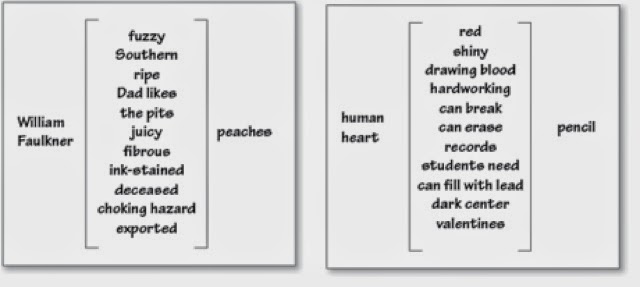
     But actually the main ideas of this activity is to learn forced connection in random words. There are more example of forced connection below.


     So that's it people, have fun on trying the games!!